

Project Summary
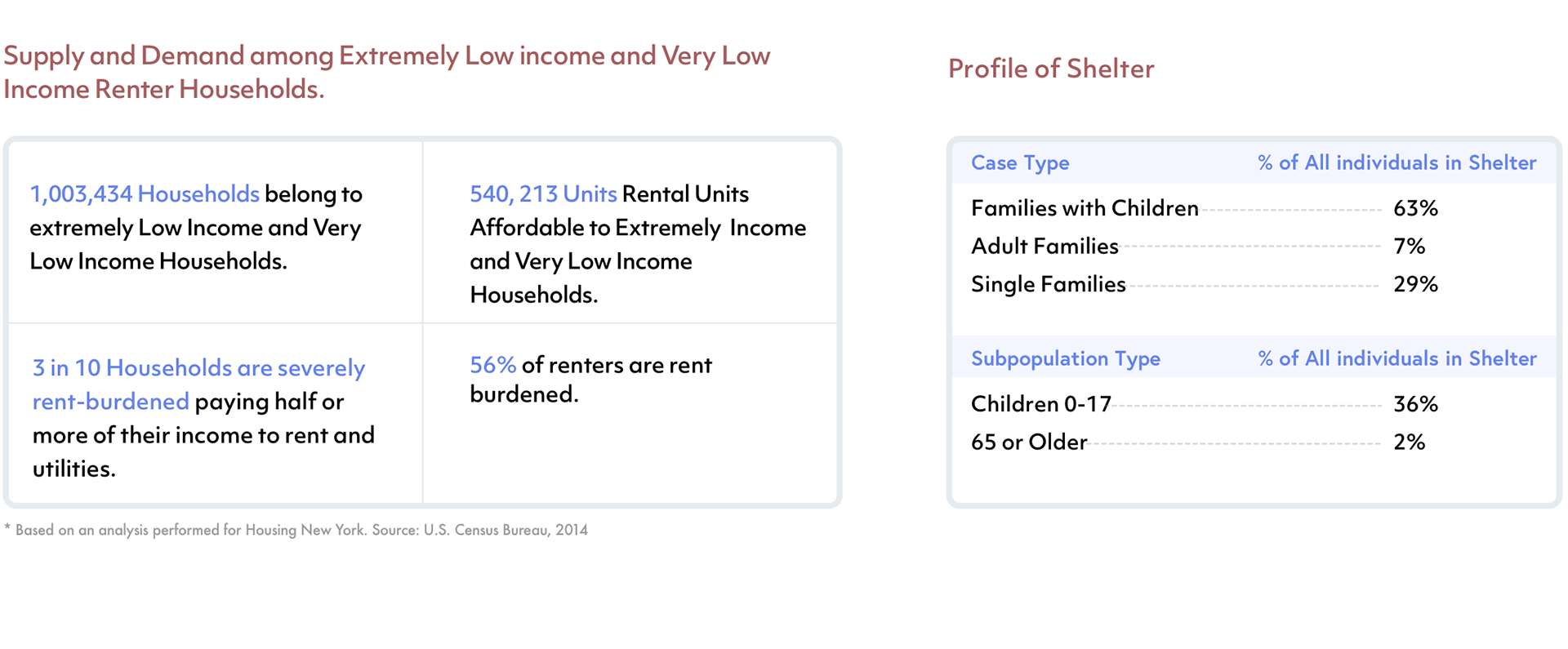
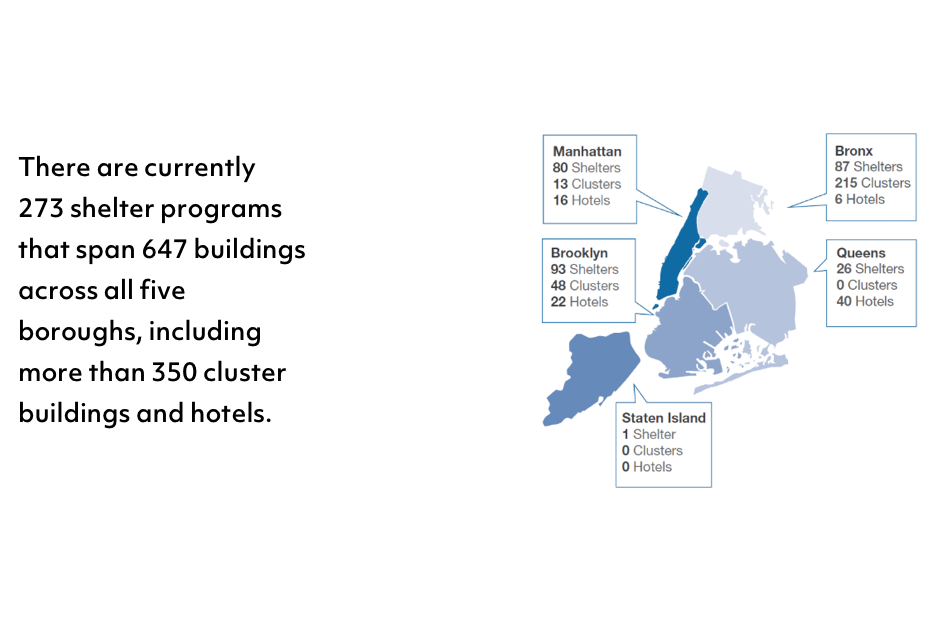
From 1994 to 2014, the Department of Homeless Services (DHS) shelter census skyrocketed 115%. At the same time, the city lost hundreds of thousands of affordable or rent-stabilized units. NYC Homeless services are massively over capacity. People who become homeless are placed in shelters without much regard for what/where is best for them.
Our Objective
To relocate existing people in a shelter to a shelter near their workplace or where they have easy access to their requirements (like a wheelchair, hospital, children’s school, etc.). This could internally be achieved by swapping the housing with other shelter people. Due to existing complications in the system, it’s practically very difficult to change once you’re allotted a shelter home.
What is the Current Scenario?
Currently, it is unlikely to be successfully transferred between shelters using the official channels due to the following reasons:
• Wait for a space to become available.
• Hope there is no one in immediate need that day to claim the space.
• Hope no other service users already in care are prioritized above you for it.
• Caseworkers manually looking into the database
Purpose of the App
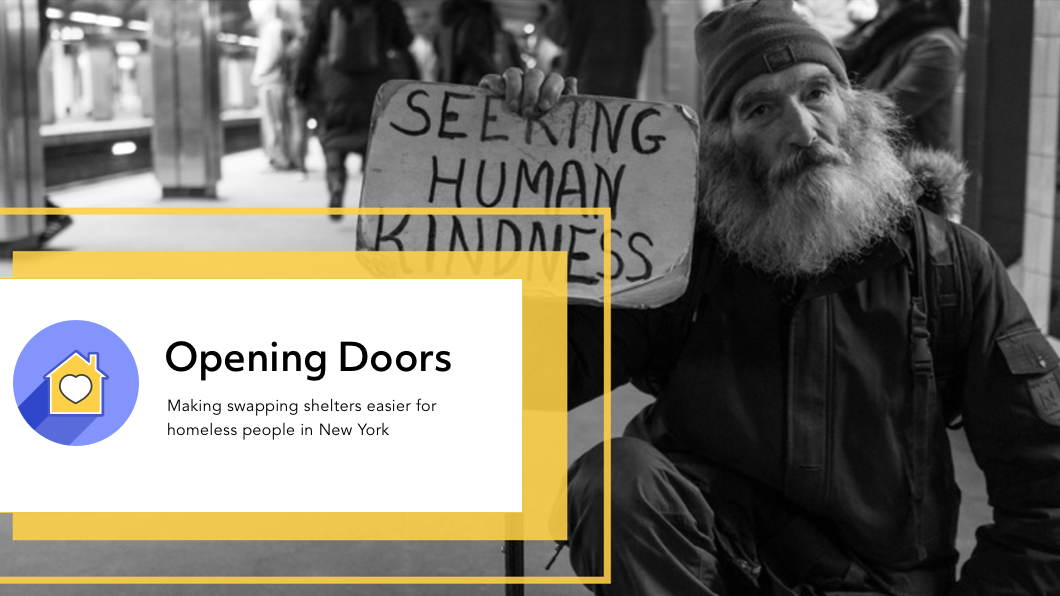
Allowing homeless people in shelters to swap their shelters with another person in the shelter in an area closer to their workplace, children’s school, or other needs.
Team and Role
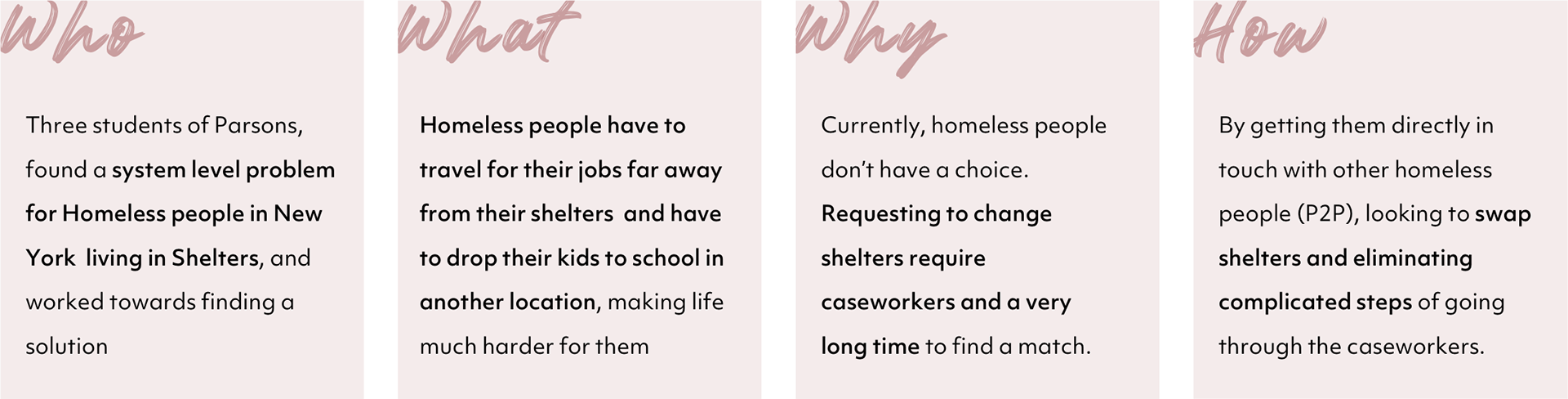
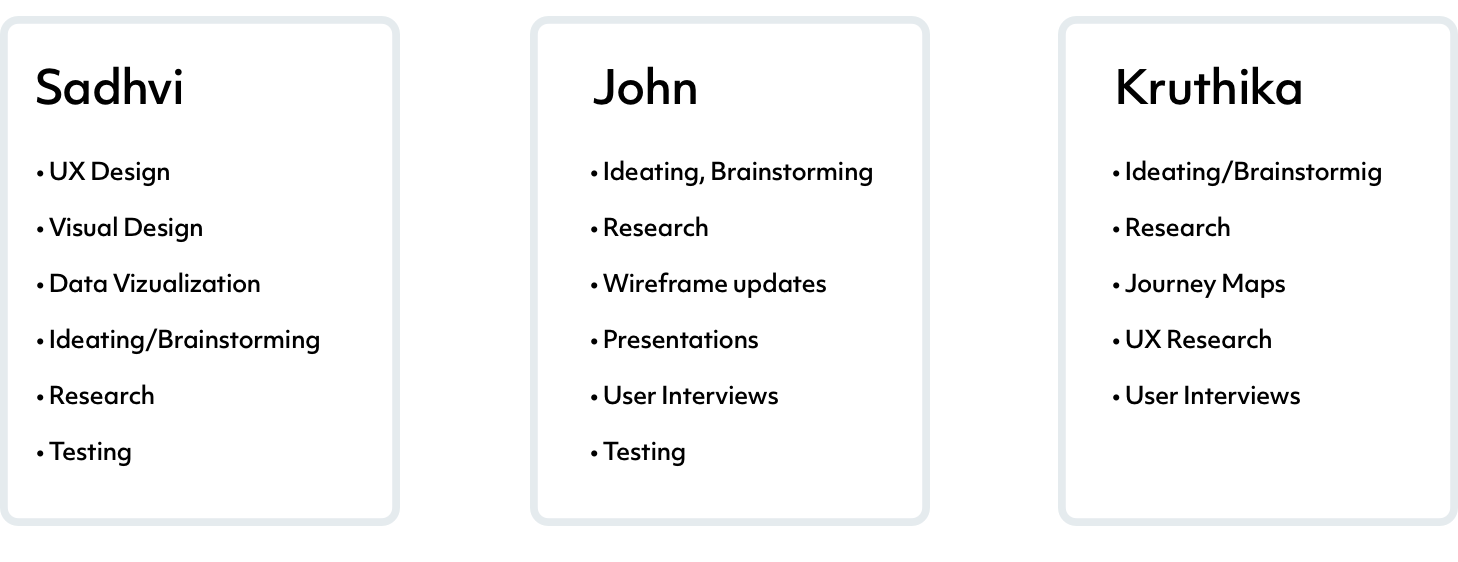
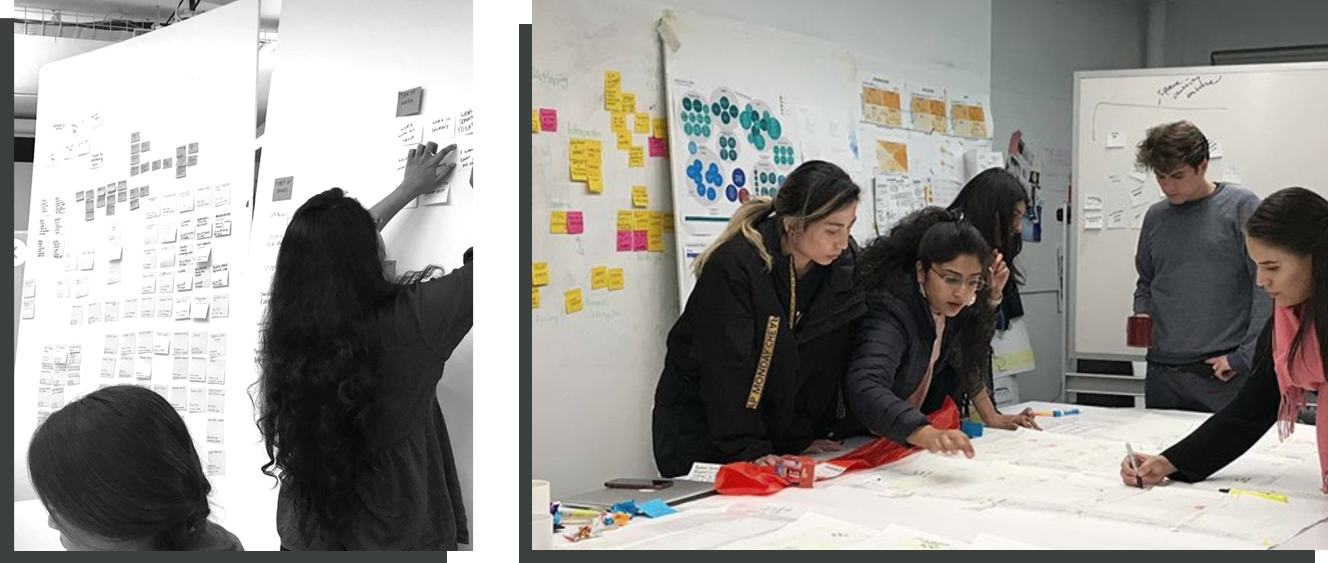
In our class of Managing Creative Projects (MS Strategic Design and Management, The New School), John, Kruthika, and I were sitting next to each other in the first class and we were asked to work together in a team. The task was to walk around the city and think of problems people face in New York. Out of multiple problems, "Homeless people" struck us hard and we started our project as a team.
Design Process
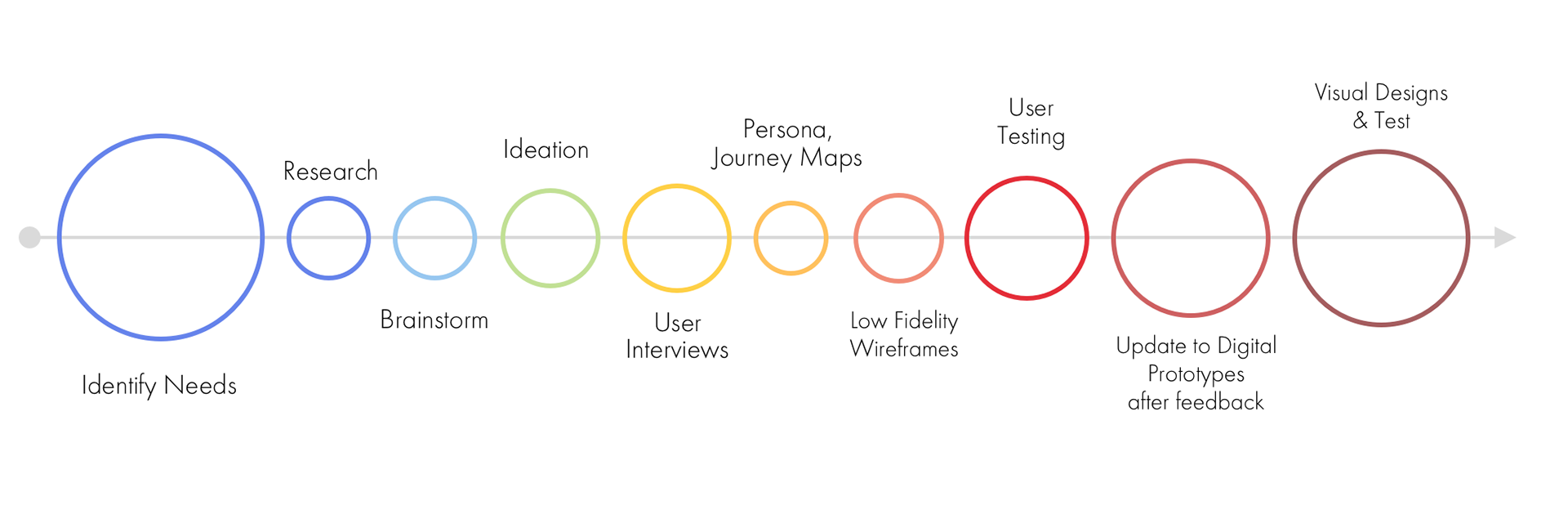
Research
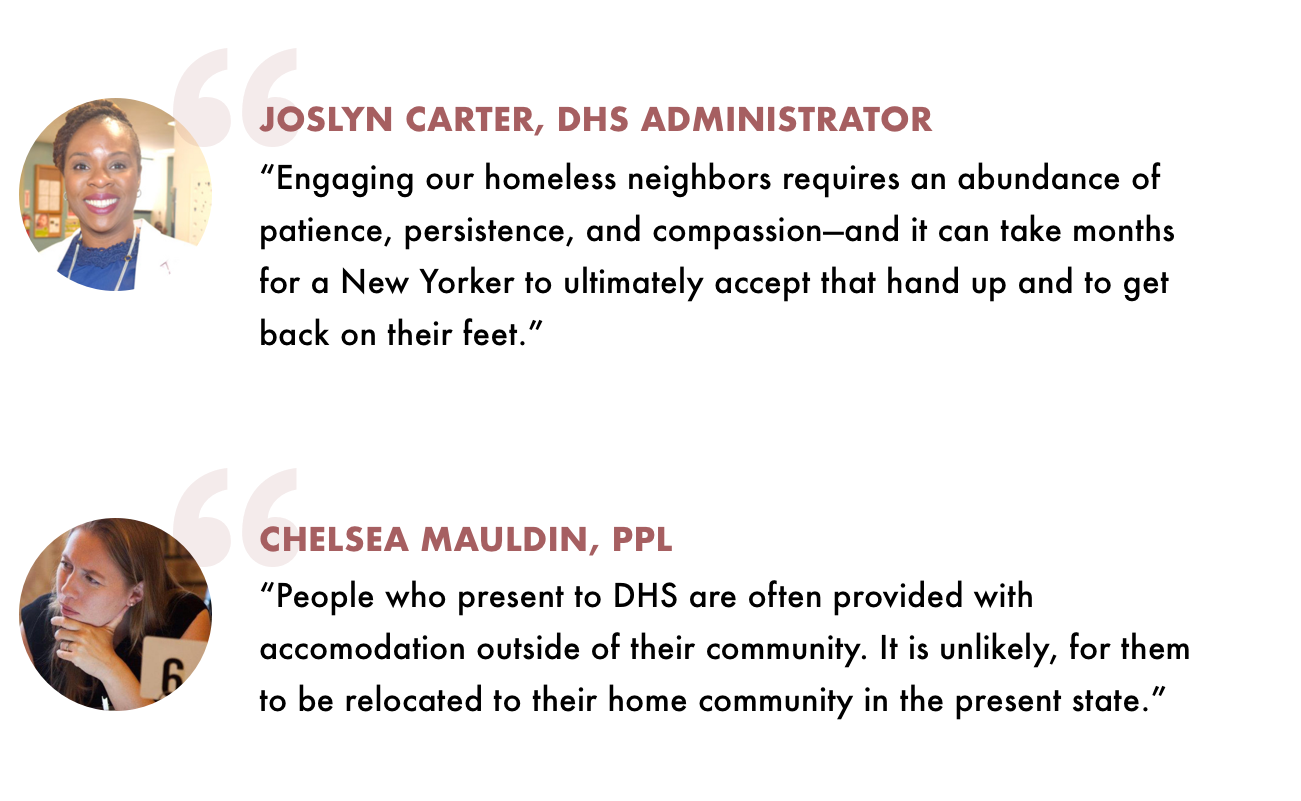
• We interviewed Subject Matter Experts to understand various forms of people-in-need (to identify the most suitable communities for this solution) and gain practical insight to inform our product/service design.
• Identified the personas
• We went through multiple reports to get valid data. There were some publications by U.S. Census Bureau that helped us know real stats from 2014.
Users and Audience
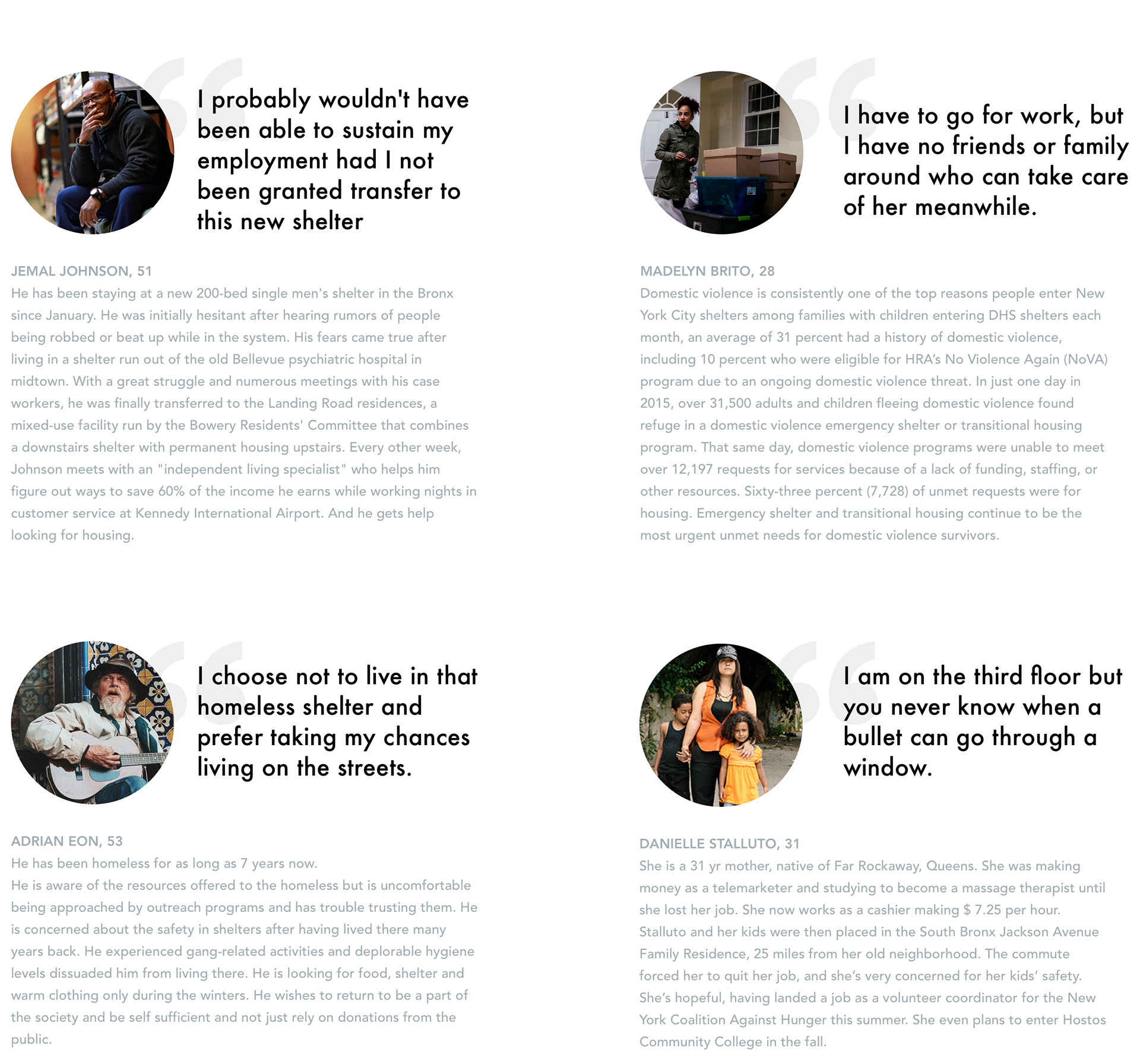
We interviewed people and researched existing stories about homeless people from free resources. And found very interesting stories around our research.
Ideation
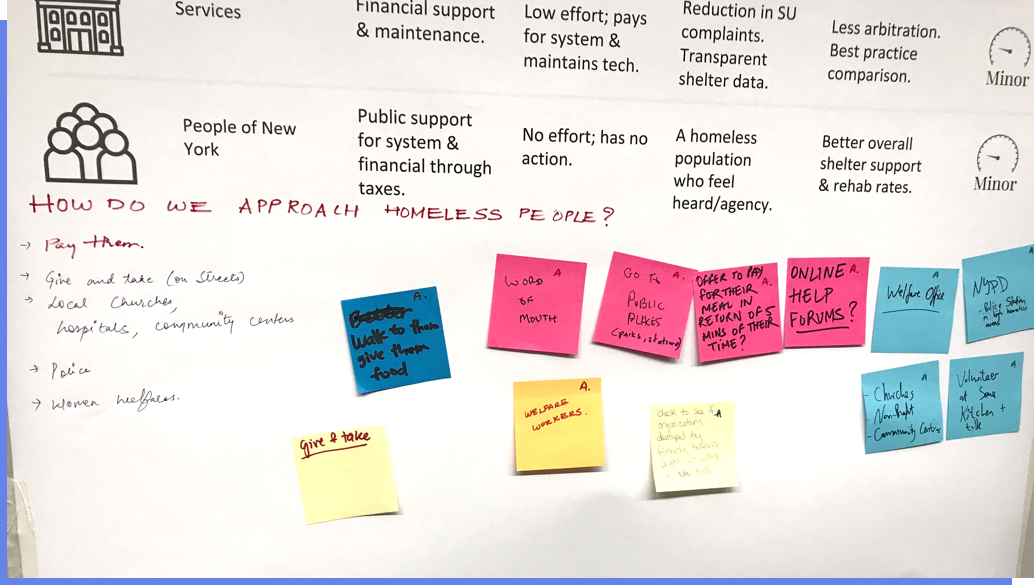
After a lot of pivots throughout the process, we finalized to make Opening Door App that will have homeless people to swap shelters with the people in the same tier. This saved a lot of effort, otherwise which would have required Case Workers to invest their time in finding the same thing manually. This took some initial research as well.
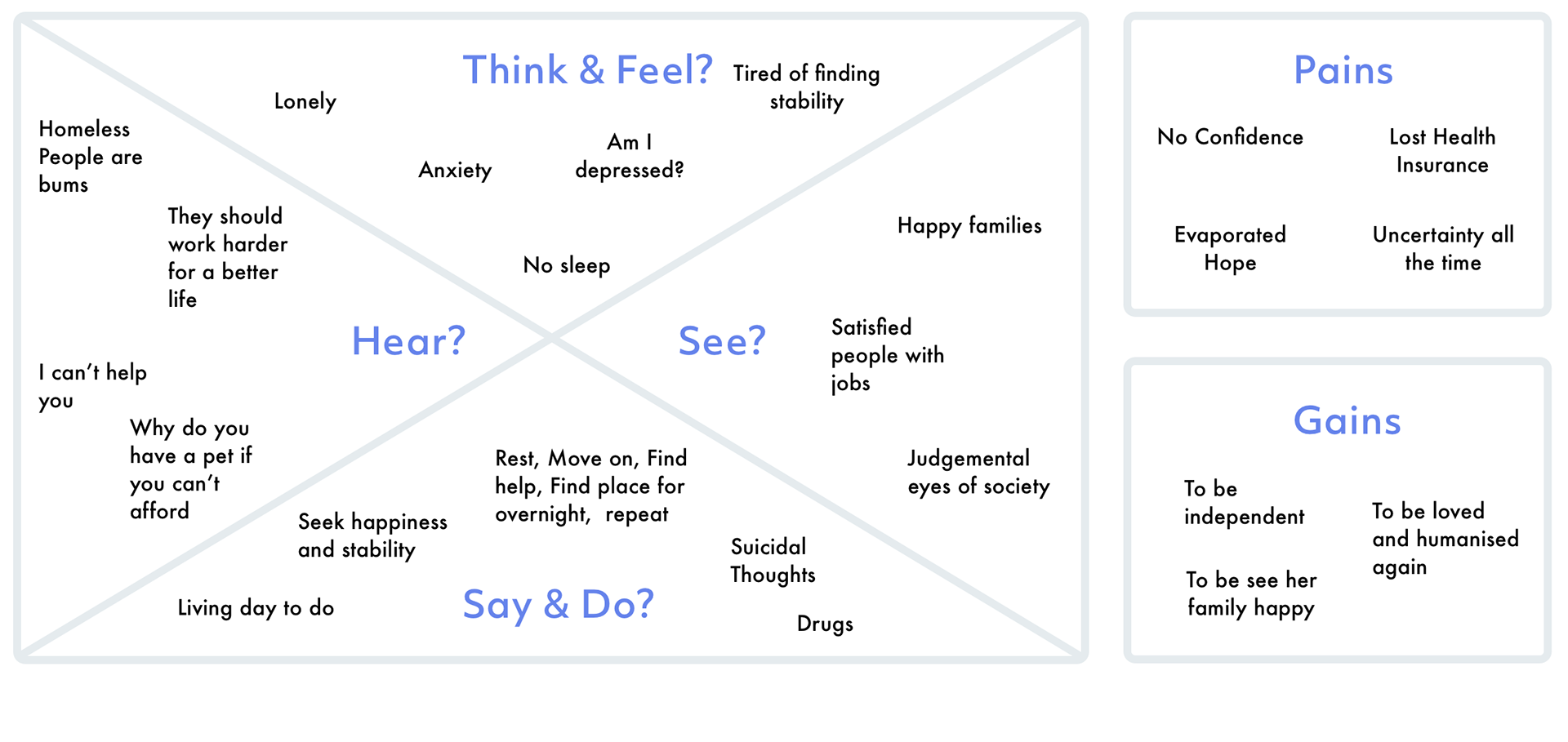
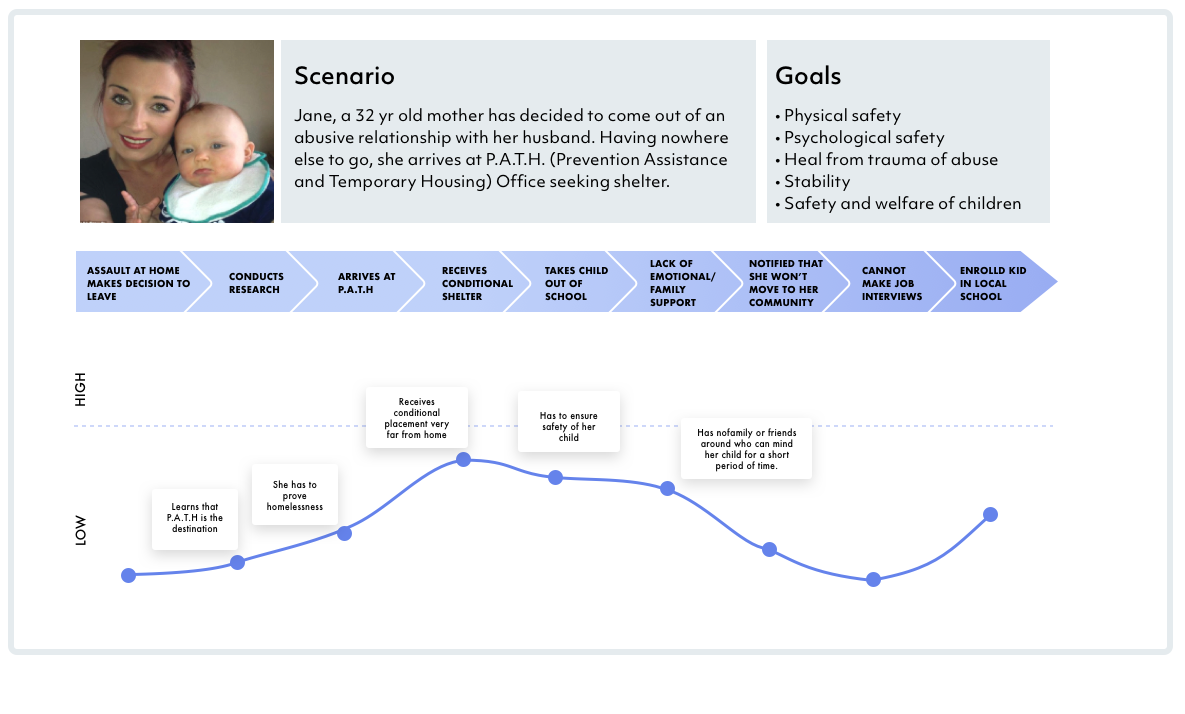
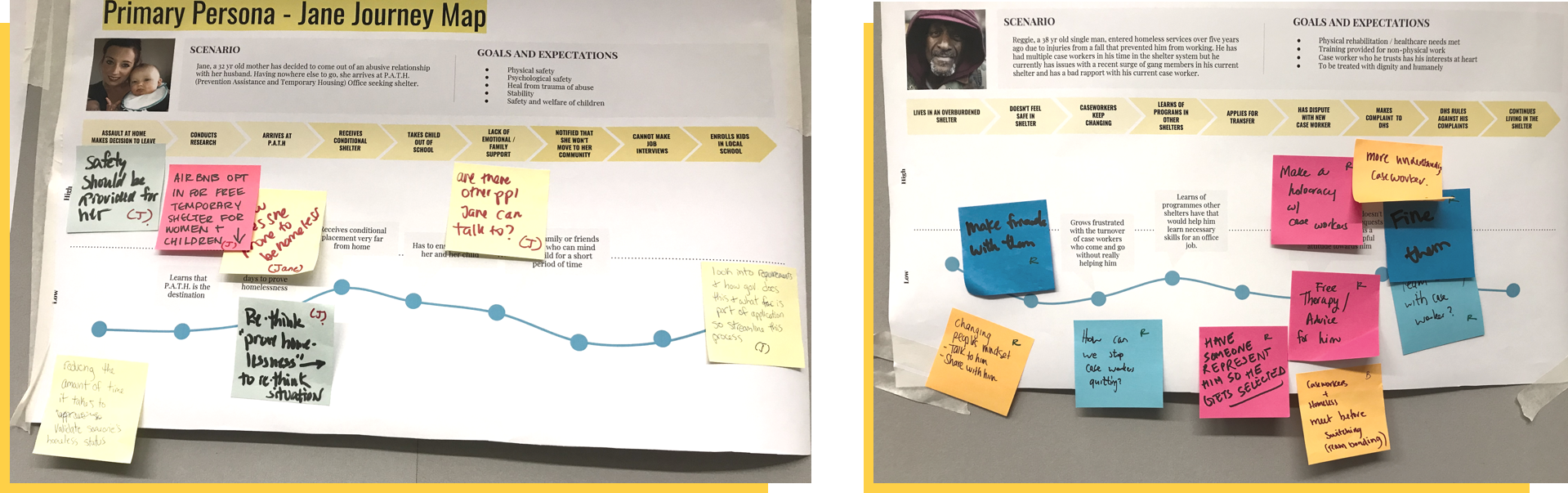
Jane's Empathy Map and Journey Map
Empathy maps helped us know deeper thoughts of our users. We could empathize after looking at what they go through. This connection was important to deeply understand them, put ourselves in their shoes, and then design with them instead of designing it from outside the ecosystem.
System Flow Diagram
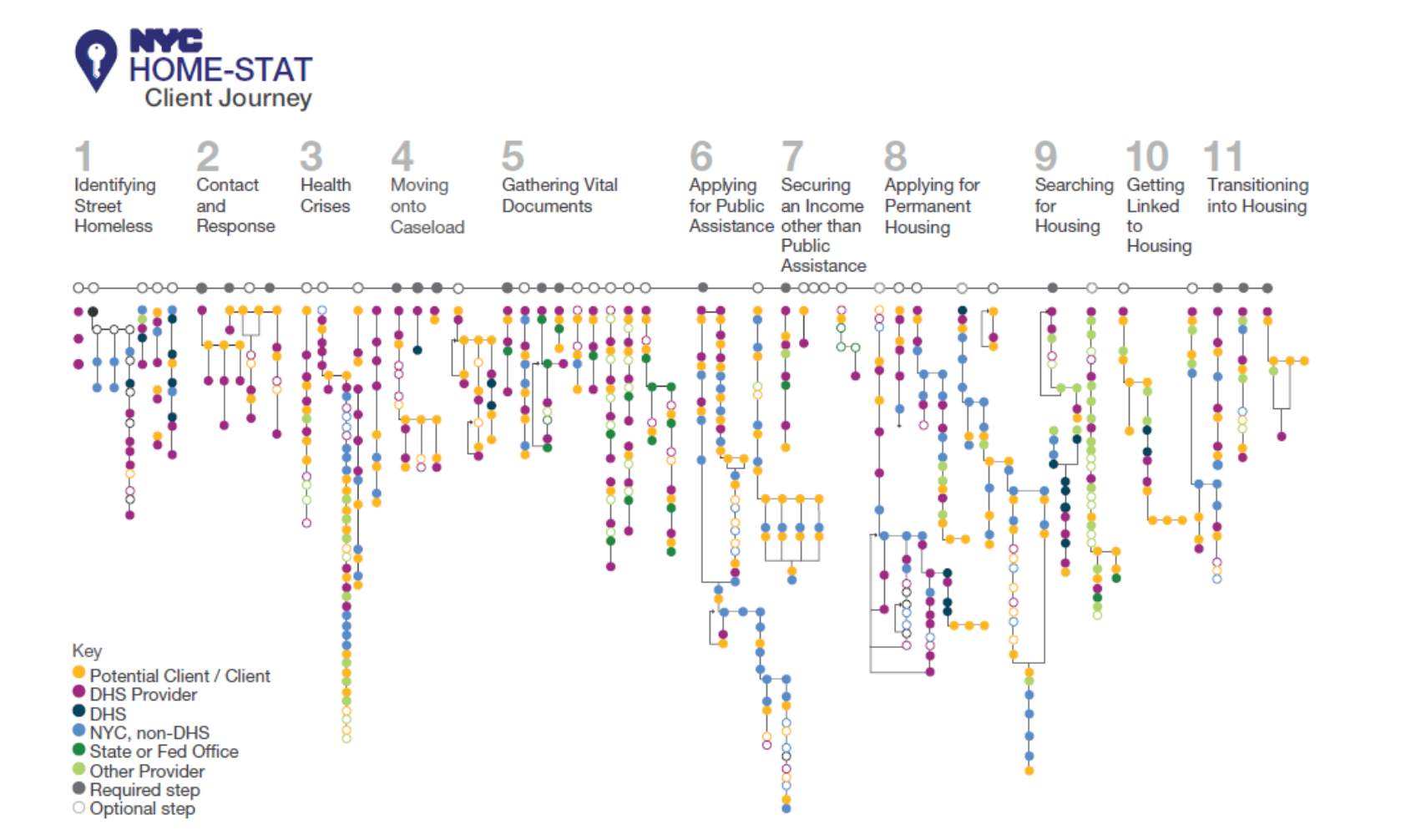
This is the journey of homeless people (clients) when they apply for a shelter, gathered from our research.
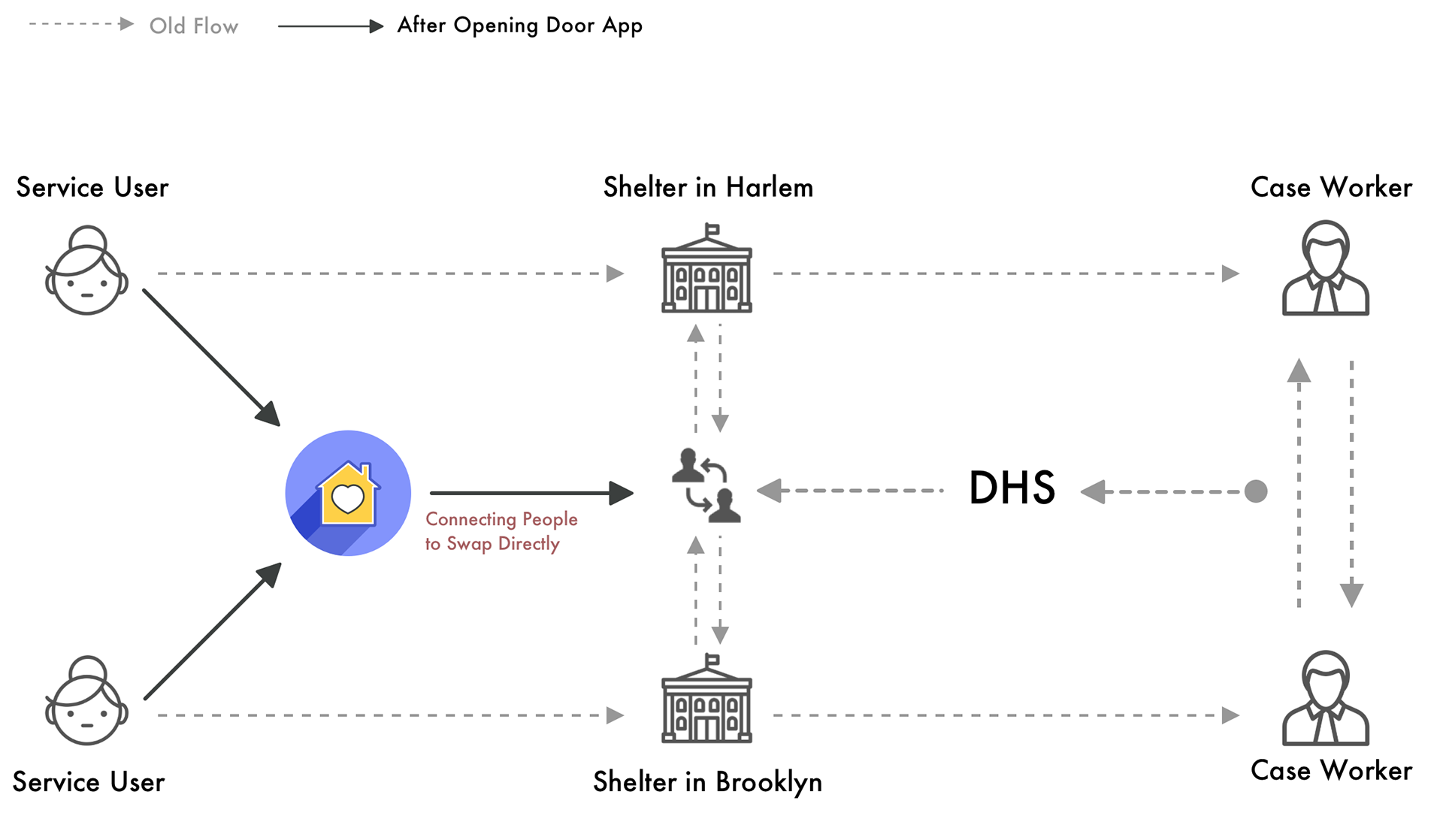
After they get home, the steps involved to swap shelters is a long process (dotted lines, shown in the system flow diagram below). It is connecting service users (homeless people) from one shelter with the service users of another shelter directly without involving caseworkers. This is resolved by the Opening Door App and made the flow shorter and convenient for users (solid lines).
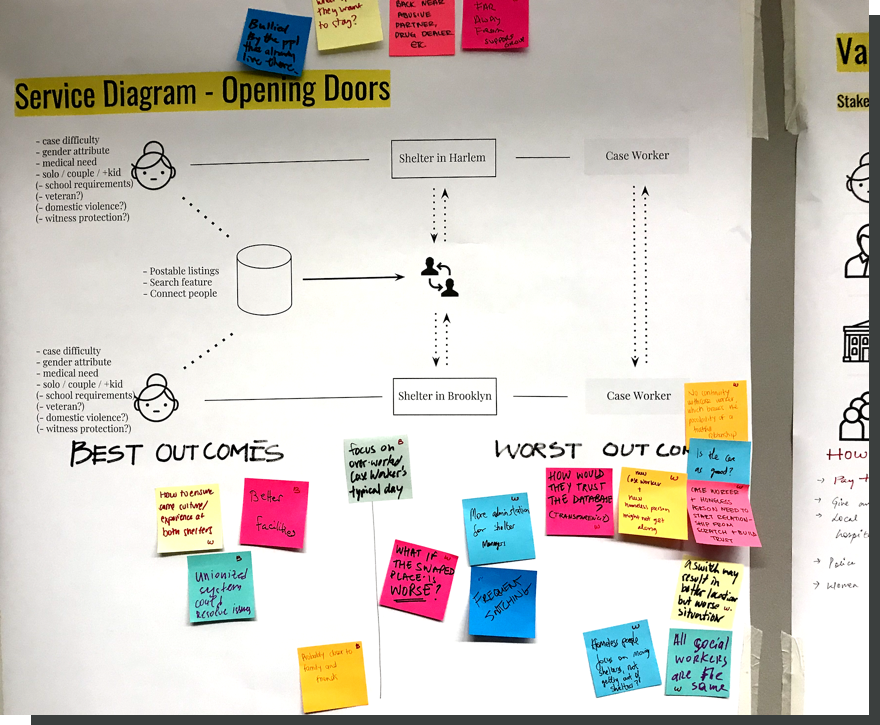
Proposed solution (System Flow) making it much easier:
Wireframes
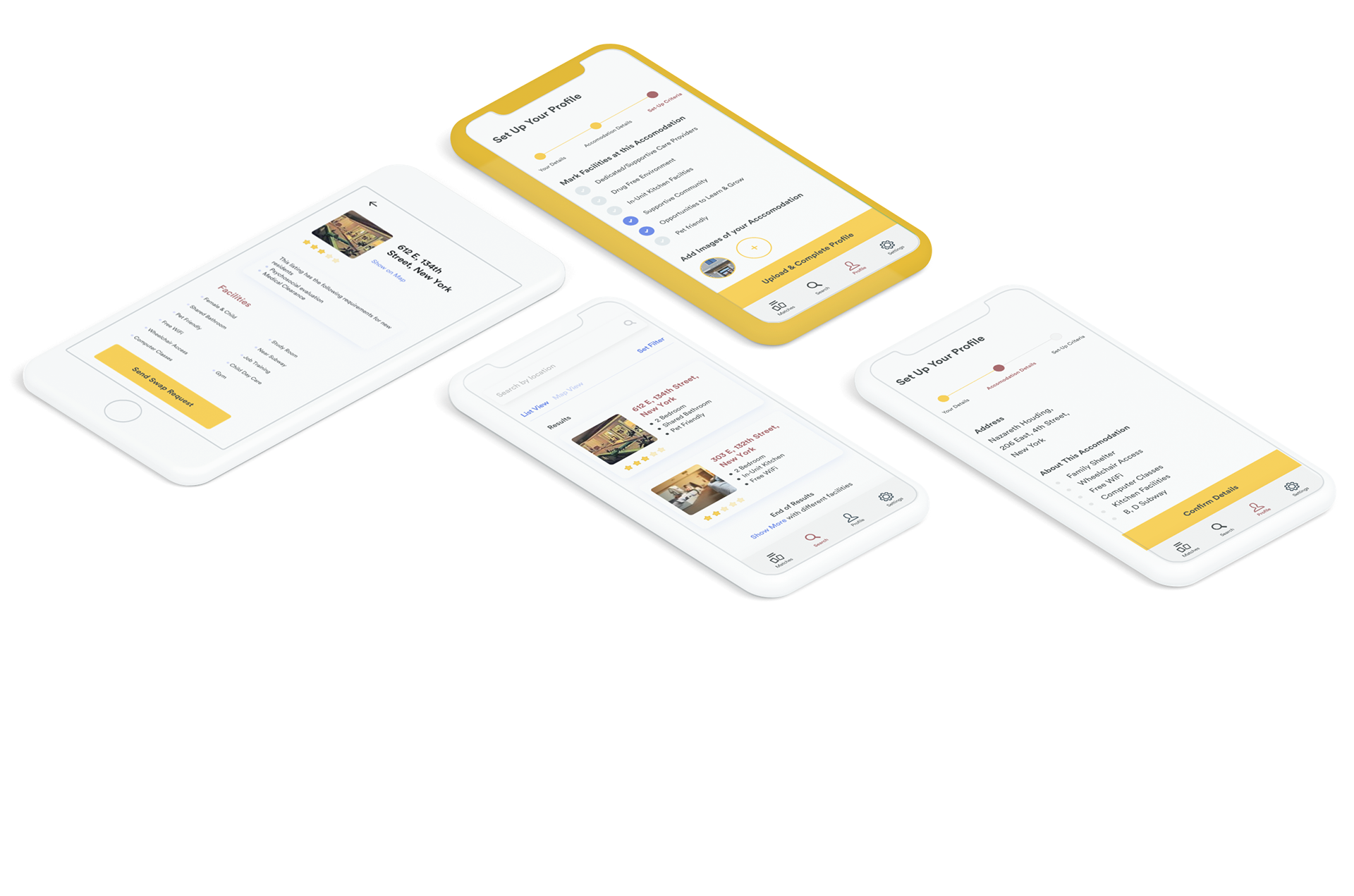
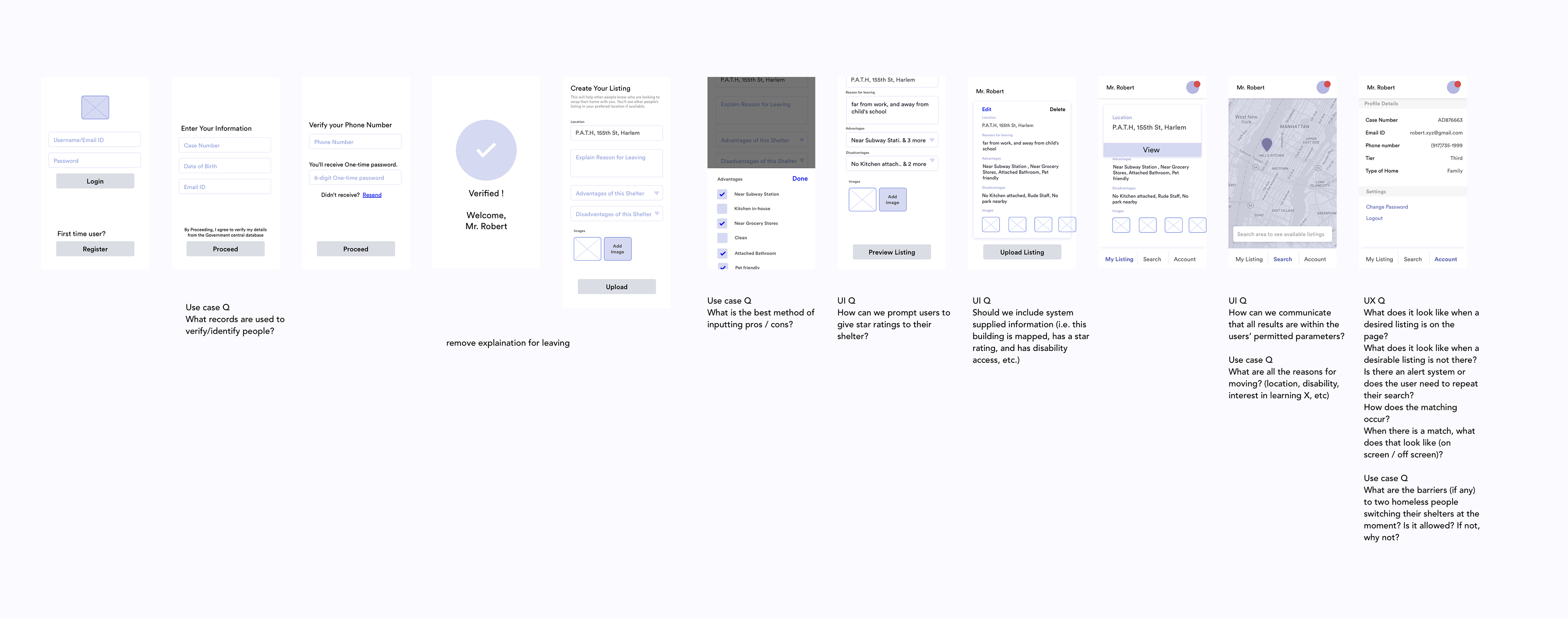
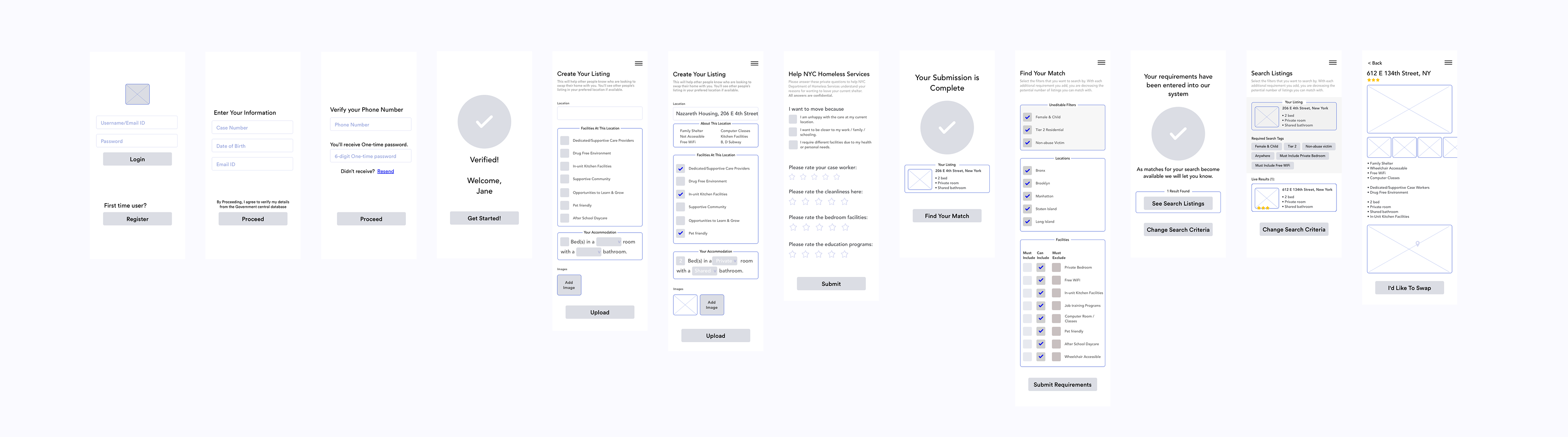
After designing flows and sketches on whiteboard and paper, we came up with low fidelity wireframes. This shows a happy-flow of a user and not an end to end flow. Also, we kept the edge cases for later versions, sticking to MVP for now.
Visual Designs/Mocks
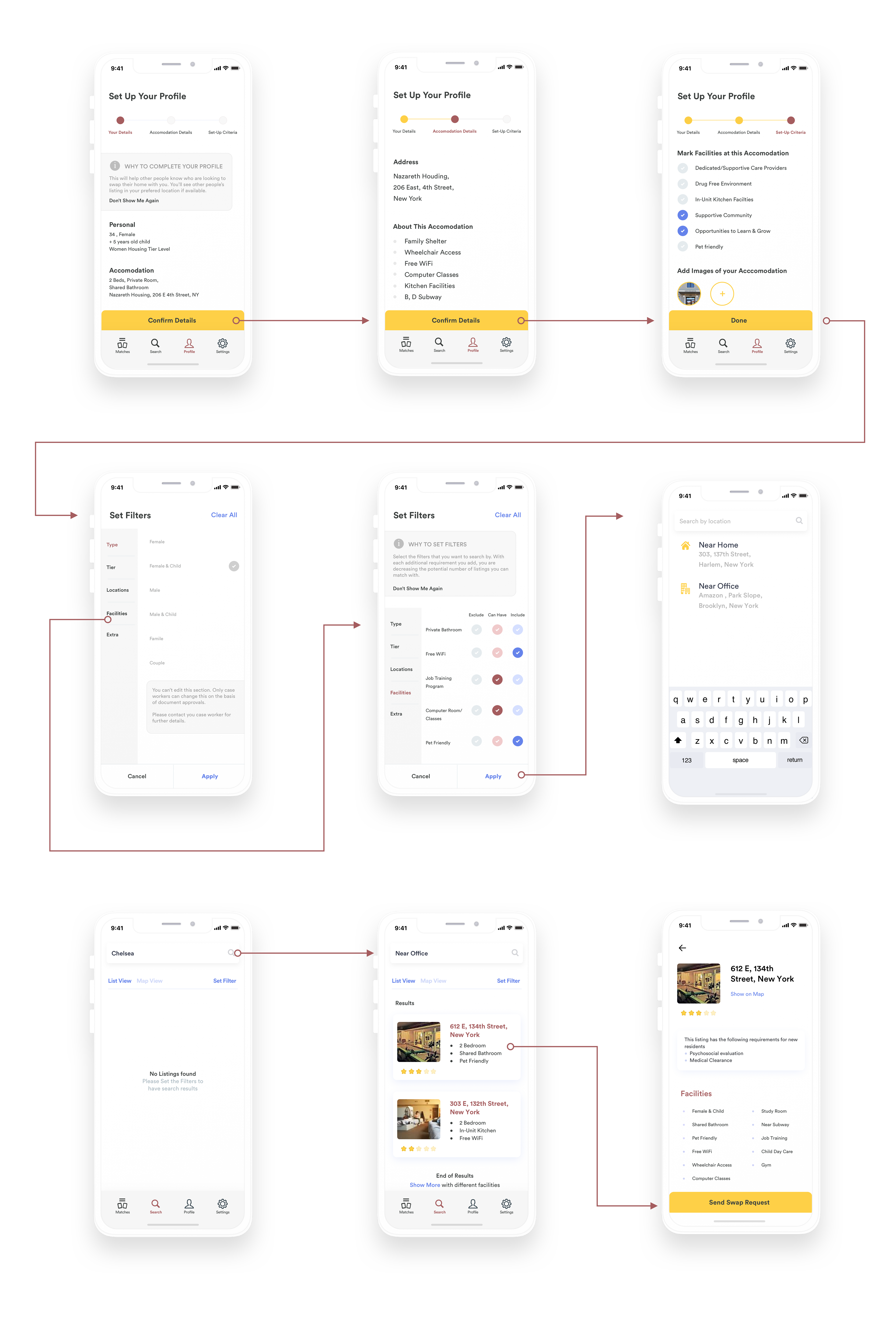
We designed the logo and decided on the branding of the app. We went through a couple of mood-boards and shortlisted the colors that contrasted well with the theme. We couldn't get the data of phones our users have - iPhone or Android to begin our MVP. We asked a few people in the shelter and they had iPhones, so we started our first model with iOS designs.
Project Conclusion
• As a team we’ve walked the streets of NYC, connected with service users, policy designers, care providers, etc. and lobbied officials in NYC Department of Homeless Services.
• We were working to broaden our activities, launch the Opening Doors platform, expand the platform to other cities, and remove the stigma homeless people-in-care faces and help rebuild their self-esteem.
• We were very excited to get in touch with someone in DHS who liked our idea, but soon we were told that they don't have the budget to fund this project. And after this, the team dispersed to their next projects.
© 2018-2020 Sadhvi Sharma. All Rights Reserved.