 |
|

Parsons · The New School
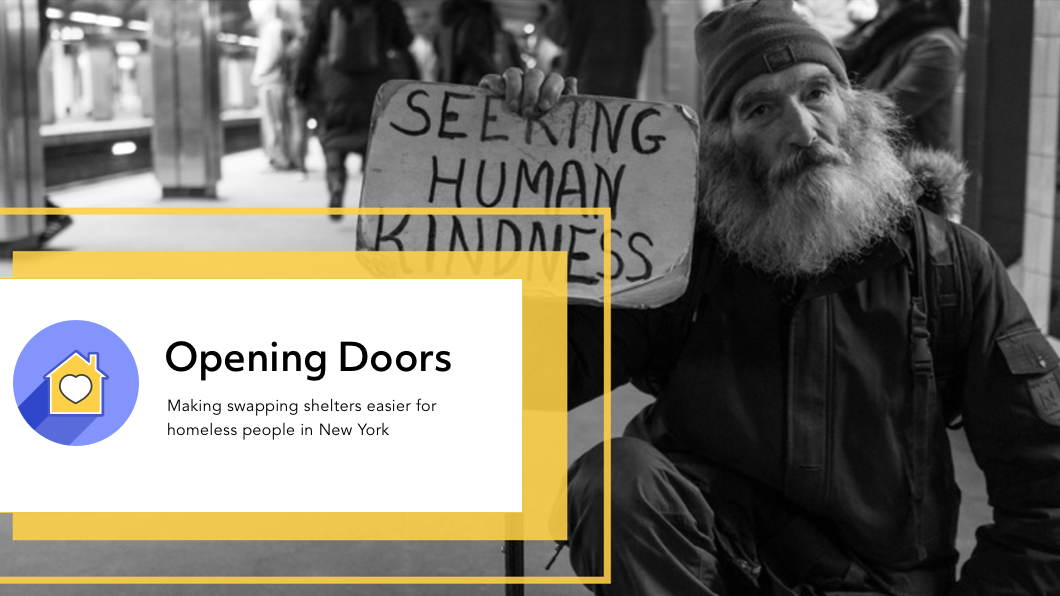
Opening Doors — Making Shelter Swaps Possible for NYC's Homeless
Quick Brief — for the hiring manager
"Engaging our homeless neighbors requires an abundance of patience, persistence, and compassion — and it can take months for a New Yorker to ultimately accept that hand up and to get back on their feet."
"People who present to DHS are often provided with accommodation outside of their community. It is unlikely, for them to be relocated to their home community in the present state."
What Happens When the System Fails You Before You Even Enter It?
Imagine you've just lost your home. You walk into a city intake center, fill out forms, wait in line for hours — and then get assigned a shelter bed in a borough you've never set foot in. Your job is in the Bronx; your children's school is in Brooklyn. Your shelter is in Queens. The system gave you a roof, but it also gave you a two-hour commute each way, and no way to change it.
This is the reality for tens of thousands of New Yorkers every year. And it became the starting point for our project.
A City in Crisis, a System Under Strain
In our class of Managing Creative Projects at Parsons, John, Kruthika, and I were sitting next to each other in the first class and were asked to work together. The task: walk around New York City and think of problems people face. Out of multiple problems, "Homeless people" struck us hard — and we started our project.
From 1994 to 2014, the Department of Homeless Services shelter census skyrocketed 115%. At the same time, the city lost hundreds of thousands of affordable or rent-stabilized units. NYC homeless services are massively over capacity. People who become homeless are placed in shelters without much regard for what or where is best for them.
Why Transferring Shelters Is Nearly Impossible
Currently, it is unlikely to be successfully transferred between shelters using the official channels. To transfer, you must:
Listening to the People Inside the System
We interviewed Subject Matter Experts to understand various forms of people-in-need, identified personas, and went through multiple reports to get valid data. There were publications by the U.S. Census Bureau that helped us understand real stats from 2014.
We interviewed people and researched existing stories about homeless people from free resources — and found very interesting stories around our research.
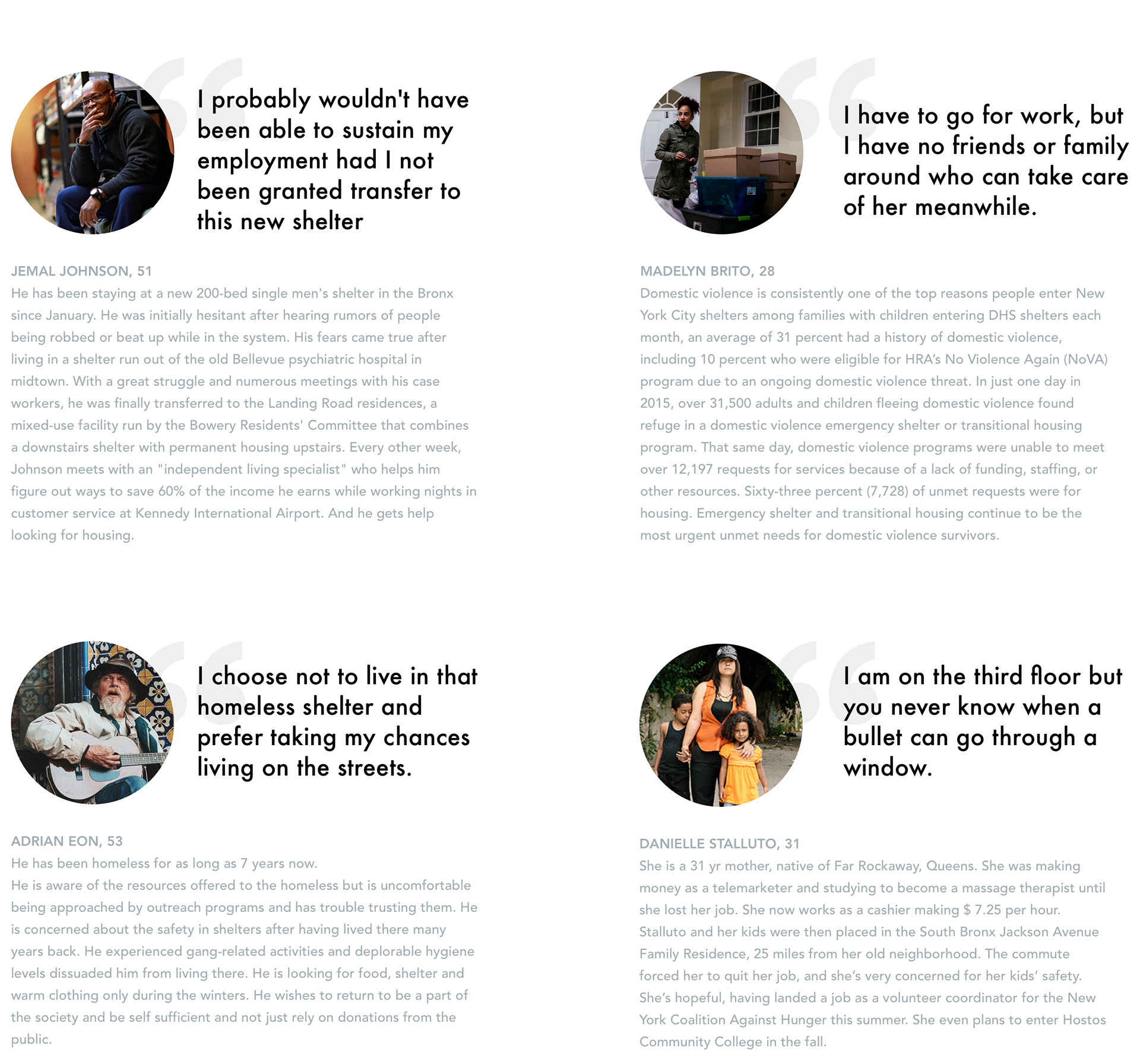
"I probably wouldn't have been able to sustain my employment had I not been granted transfer to this new shelter."
Jemal Johnson, 31Men's shelter in the Bronx. Struggled to get transferred closer to his job at Kennedy International Airport.
"I have to go for work, but I have no friends or family around who can take care of her meanwhile."
Madelynn Brito, 26Domestic violence survivor. 35% of families entering DHS shelters have a history of domestic violence.
"I choose not to live in that homeless shelter and prefer taking my chances living on the streets."
Adrian Don, 33Homeless for 7 years. Uncomfortable with outreach programs and concerned about safety in shelters.
"I am on the third floor but you never know when a bullet can go through a window."
Isabelle Stellato, 31Mother in Far Rockaway, Queens. Kids placed in the South Bronx — the commute forced her to quit her job.
There are currently 273 shelter programs that span 647 buildings across all five boroughs, including more than 350 cluster buildings and hotels.
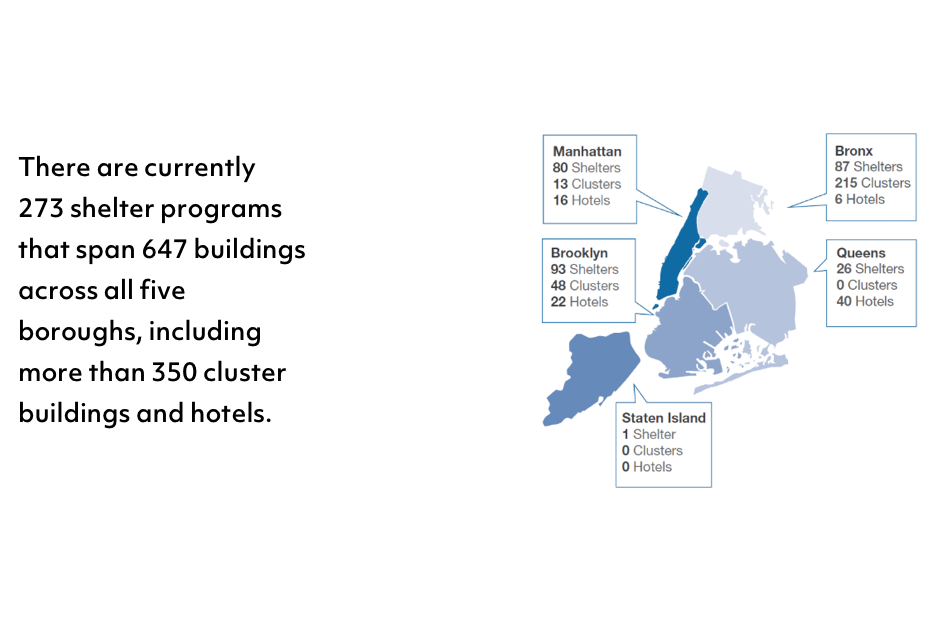
Supply & Demand of Shelter in NYC
Profile of Shelter Population
| Category | Share |
|---|---|
| Families with children | 67% |
| Single adults | 24% |
| Adult families (no children) | 9% |
Empathy Map & Journey Map
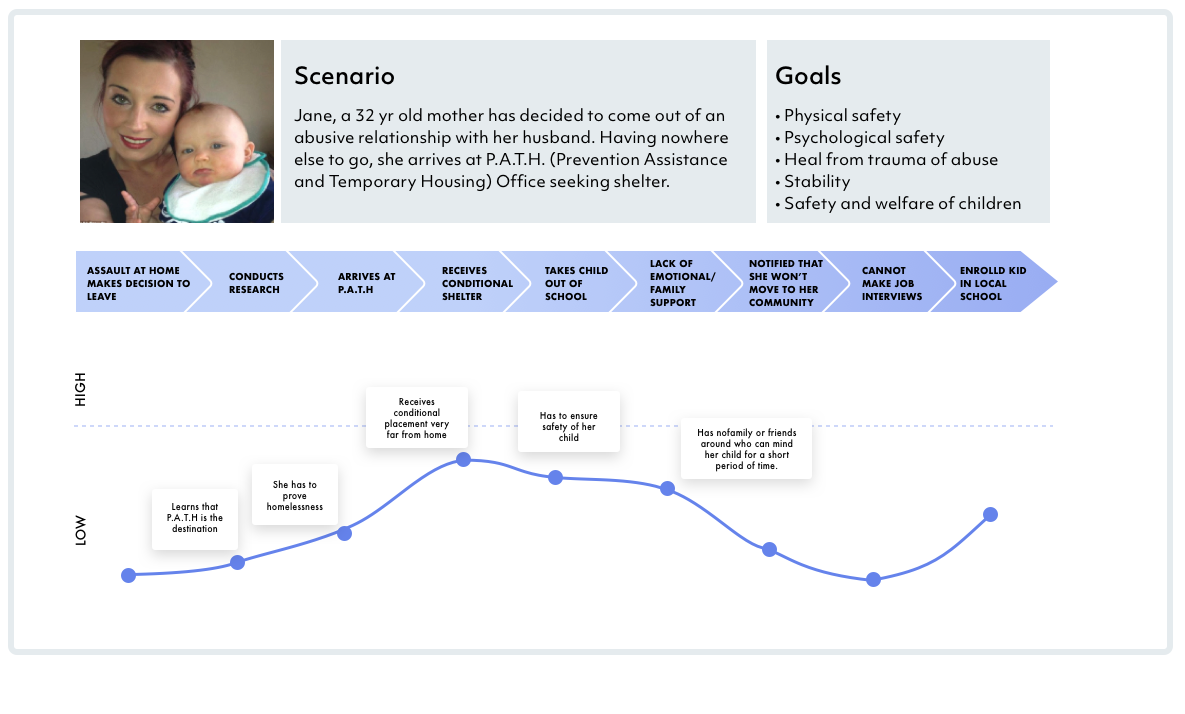
Empathy maps helped us understand the deeper thoughts of our users. We could empathize after looking at what they go through daily. This connection was important to deeply understand them, put ourselves in their shoes, and design with them — instead of designing from outside the ecosystem.
Jane's Empathy Map
Think & Feel?
- Lonely
- Tired of finding stability
- Am I depressed?
- Anxiety
- No sleep
Hear?
- Homeless people are bums
- They should work harder for a better life
- I can't help you
- Why do you have a pet if you can't afford
See?
- Happy families
- Satisfied people with jobs
- Judgemental eyes of society
Say & Do?
- Rest, Move on, Find help, Find place for overnight, repeat
- Seek happiness and stability
- Living day to day
- Suicidal thoughts
- Drugs
Pains
- No confidence
- Lost health insurance
- Evaporated hope
- Uncertainty all the time
Gains
- To be independent
- To be loved and humanised again
- To see her family happy
What If They Could Just… Swap?
After a lot of pivots throughout the process, we arrived at a deceptively simple idea: what if homeless residents in shelters could directly swap placements with someone in a shelter closer to their needs? No caseworker bottleneck. No months of waiting. Just two people, in the same tier of shelter, exchanging locations — the way people swap apartments on Craigslist, but within the system's rules.
This saved enormous effort that would otherwise require caseworkers to invest their time in finding the same matches manually. We called it the Opening Doors App.
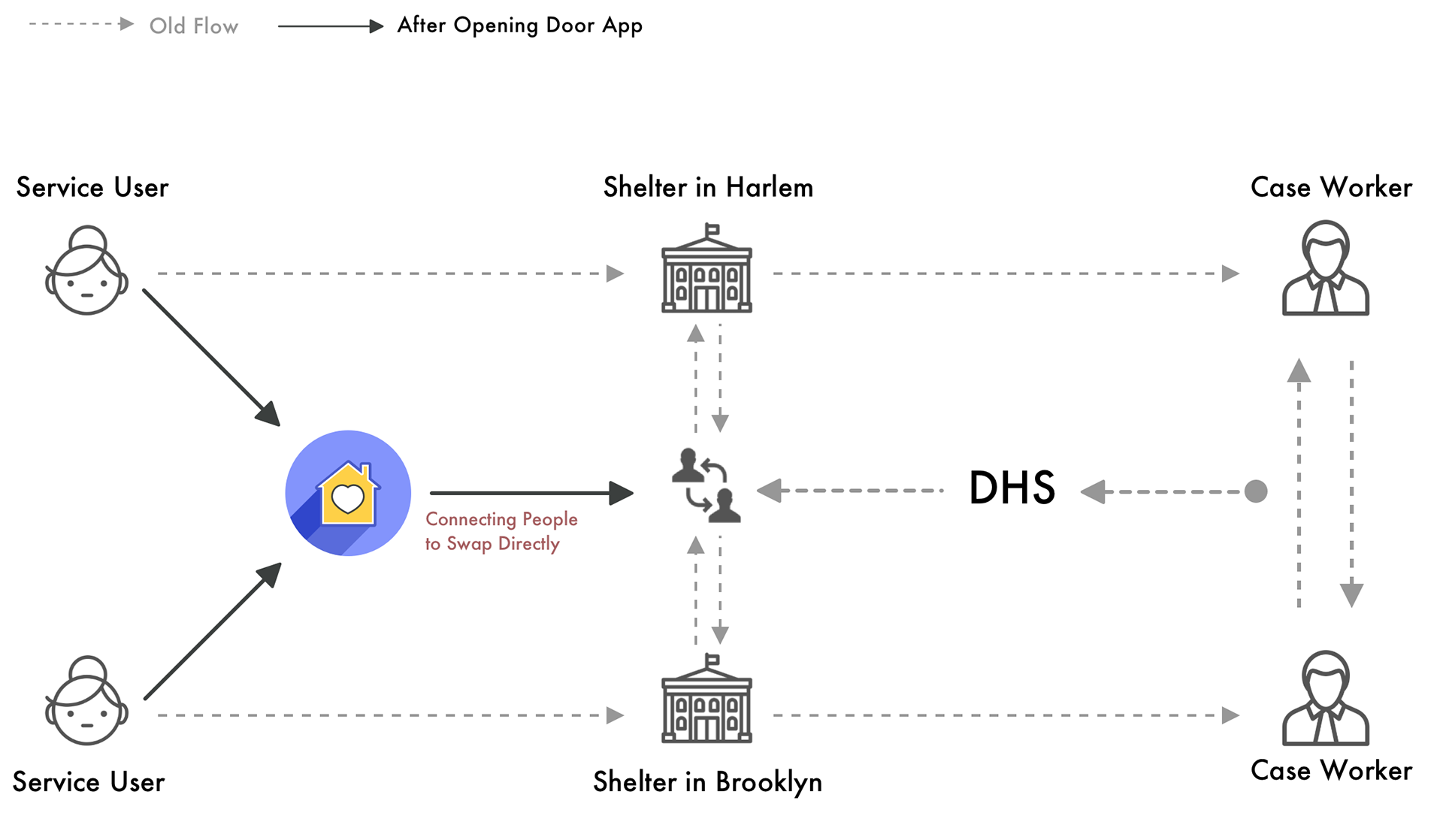
System Flow — Before & After
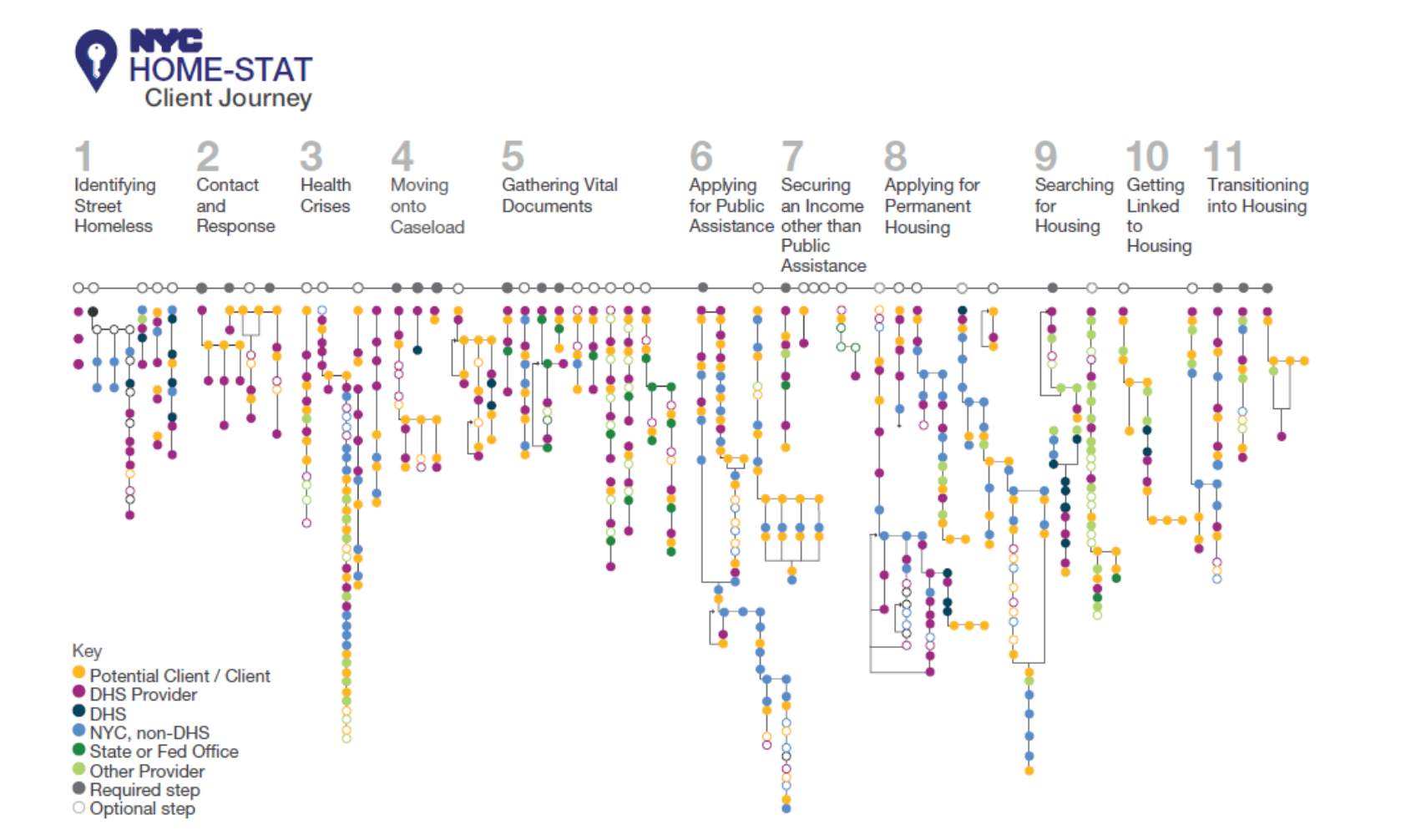
We mapped the journey of homeless clients when they apply for a shelter. After placement, the steps involved to swap shelters is a long, winding process. The Opening Doors App connects service users from one shelter with users of another shelter directly — without involving caseworkers — making the flow shorter and more convenient.
From Wireframes to a Living Prototype
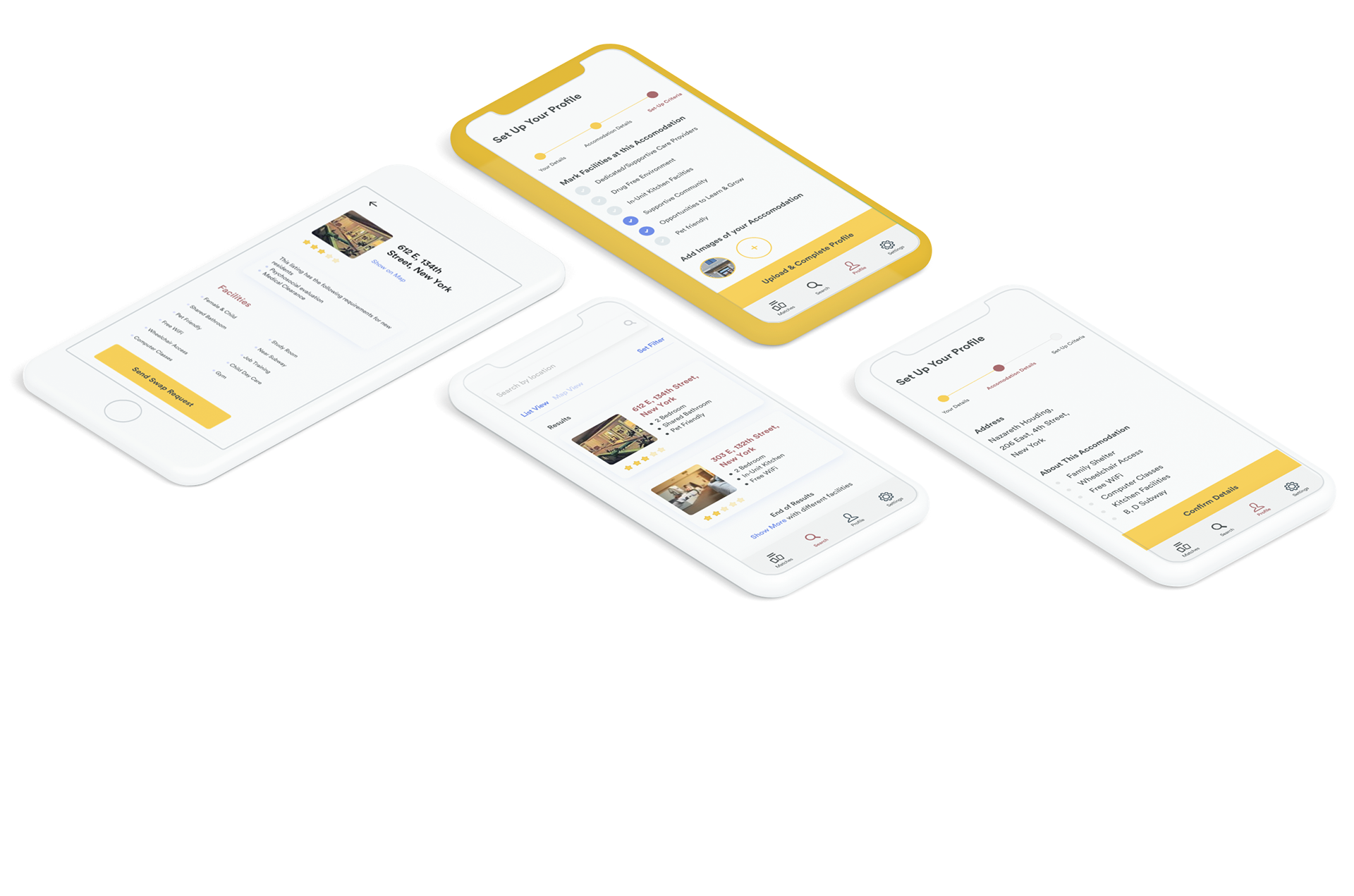
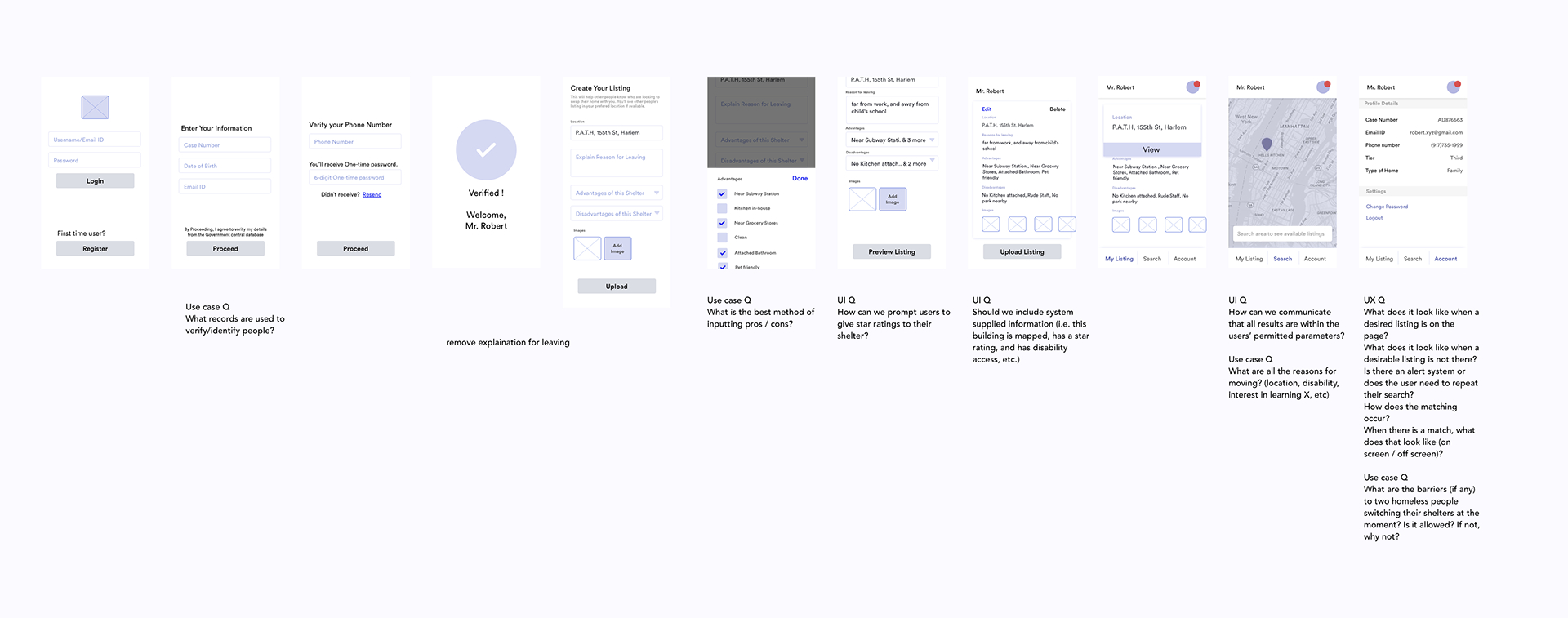
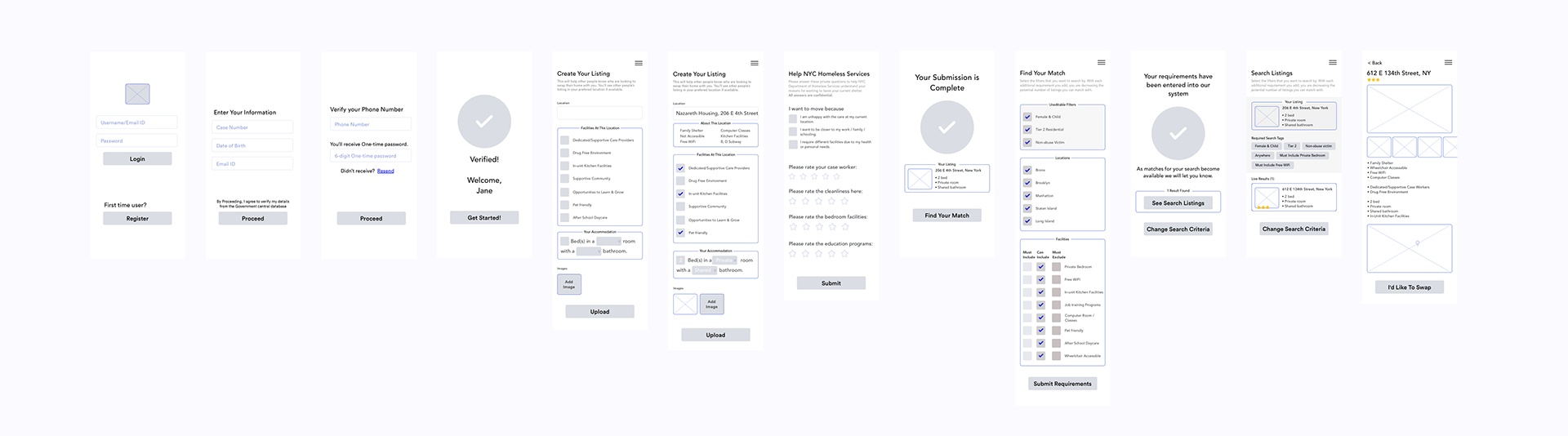
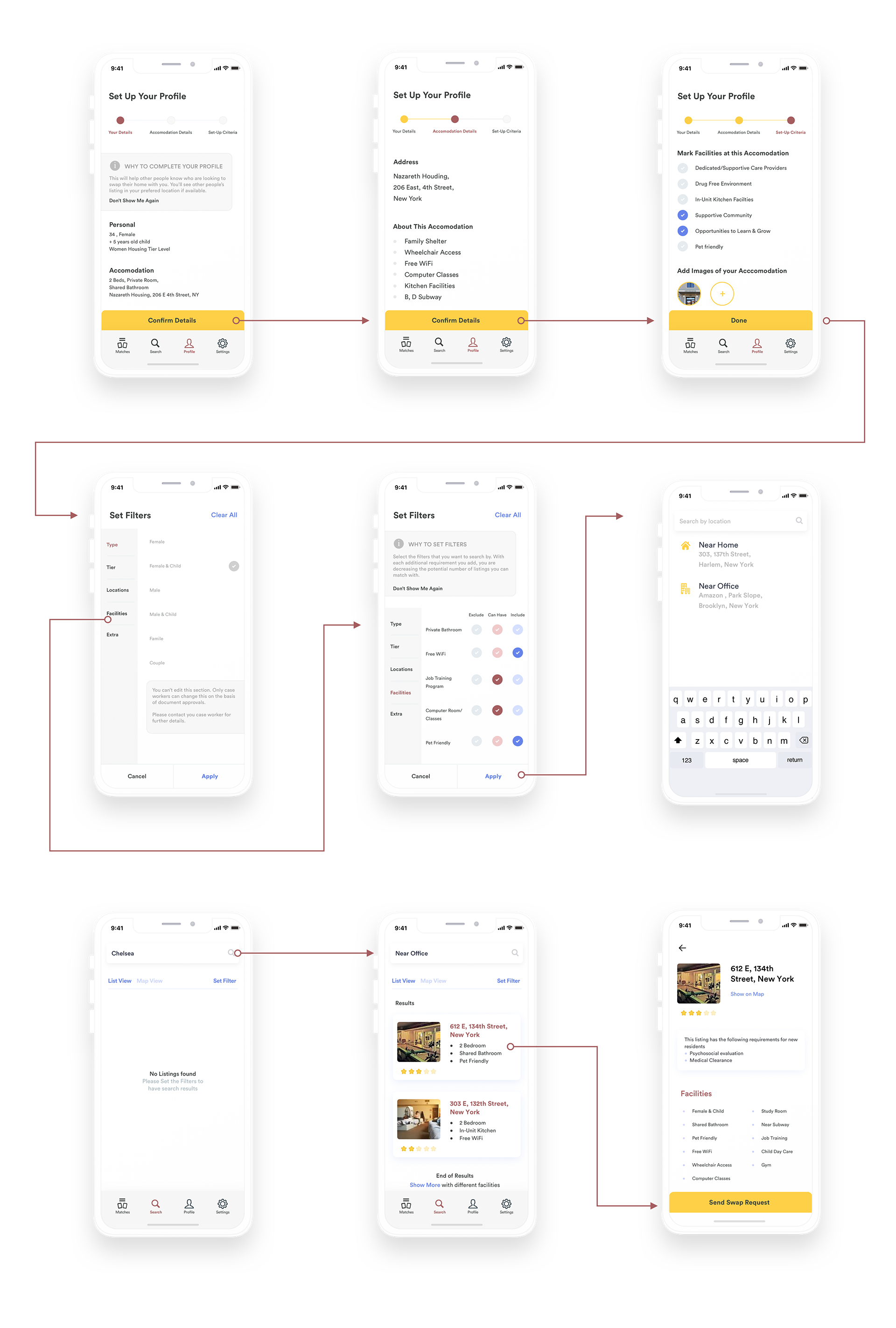
With our concept validated through research and system mapping, we moved into design. The app needed to be simple enough for anyone to use — regardless of tech literacy — while handling the complexity of matching shelter tiers, locations, and user preferences.
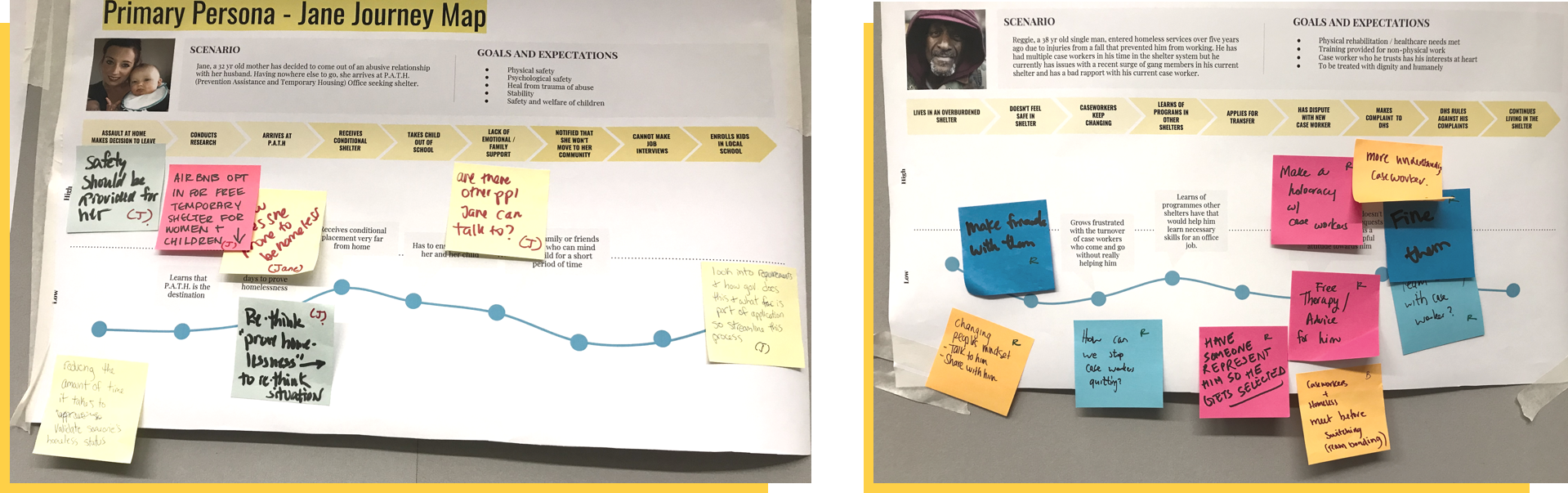
Wireframes
High Fidelity Mockups
A Door That Stays Open
Opening Doors started as a class project — three students walking around New York, looking for problems worth solving. It became something deeper: a service design exercise in empathy, systems thinking, and the belief that small structural changes can restore dignity.
We didn't build a product that shipped. But we built a proof of concept that showed the system could be rethought — that the people inside it could be given a voice, a choice, and a path that didn't require waiting months for a caseworker to manually flip through a database.
Key Outcomes
Delivered a comprehensive service design — from system mapping to high-fidelity prototype — presented at Parsons, The New School.
Conducted primary research with subject matter experts and secondary research using U.S. Census Bureau data to validate the problem space.
Demonstrated how peer-to-peer matching could reduce caseworker load and give shelter residents agency in their own housing decisions.
Next case study
Splitwise →